1 June 2026 | Press release
3D Vision Pioneer Andrea Tagliasacchi joins Wayve Labs as Principal Scientist
Andrea Tagliasacchi brings expertise in neural scene representations and novel view synthesis to advance Wayve’s foundational science in 3D world models and embodied AI.

VANCOUVER, June 1, 2026 – Wayve, a pioneer in embodied AI, is pleased to announce that Andrea Tagliasacchi has joined Wayve Labs as Principal Scientist, based in Vancouver.
Andrea will lead foundational research on 3D scene understanding, neural scene representations, and world models, laying the scientific underpinnings to push the frontier of embodied AI for autonomy.
Andrea joins from his role as Associate Professor and Visual Computing Research Chair at Simon Fraser University; he also supervises students at the University of Toronto. Previously, he spent seven years at Google across Daydream, Stadia, Brain and DeepMind, working at the intersection of Computer Graphics, 3D Computer Vision and Machine Learning. Prior to that, held the Industrial Research Chair in 3D Sensing at the University of Victoria. His alma mater includes EPFL (postdoc), Simon Fraser University (PhD, NSERC Alexander Graham Bell Fellow), and Politecnico di Milano (MSc).
One of the most highly cited researchers in 3D deep learning globally, Andrea has accumulated over 15,000 citations across more than 100 scientific papers — the majority published at tier-1 venues such as CVPR, ICCV, ECCV, NeurIPS, ICLR, and SIGGRAPH — and nearly two dozen patents.
Andrea’s research is also part of commercially-deployed products across the tech ecosystem. He is best known for his work on neural rendering, particularly Neural Radiance Fields (e.g. MobileNeRF) and Gaussian Splatting (e.g. 3DGS-MCMC, pixelSplat), where he has been a leading contributor since the field’s early days.

He has also been a pioneer in generative 3D, with contributions ranging from camera control in diffusion models to end-to-end “geometry-free” novel view synthesis through works such as Scene Representation Transformers, 3DiM, and 360Anything. His synthetic dataset work, notably Kubric, supported a wave of early end-to-end 3D learning research and remains in active use today to compensate for the scarcity of real-world data when modeling 4D — 3D in motion.
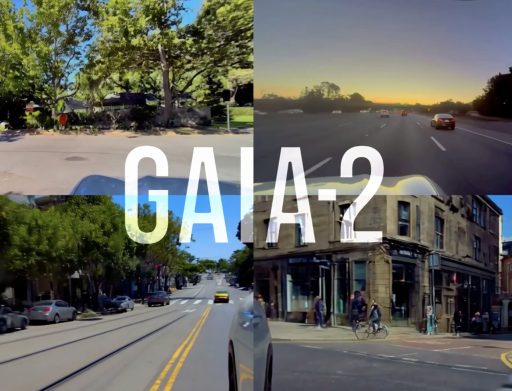
Beyond his individual research, Andrea is known for bringing researchers together: his student cohort and active collaborations span Simon Fraser University, the University of British Columbia, and the University of Toronto, anchoring an unusually dense network of 3D-vision research across Canada. In addition to being Senior Area Chair at CVPR and serving as an associate editor at IEEE Transactions on Pattern Analysis and Machine Intelligence (TPAMI), he co-organizes the Geometry-Free Novel View Synthesis workshop, which debuted at ECCV 2025 and returns at CVPR 2026 — a key gathering point for research aligned with Wayve’s GAIA work.
Jamie Shotton, Chief Scientist, Wayve, says:
“Andrea is one of the most respected researchers at the boundary of 3D vision and learned scene representations, and I’m excited to have him join Wayve Labs. The problems he’s spent his career on, understanding and reconstructing the world from images, sit right at the heart of what we’re building with embodied AI. His scientific depth, combined with the academic relationships he brings across Canadian universities, will be invaluable as we deepen our research capability.”
Andrea Tagliasacchi, Principal Scientist, Wayve, says:
What drew me to Wayve Labs was, first, the research.They have been ahead of their time more than once: end-to-end agents before the field caught up, and with GAIA, exploring neural rendering years before the competition. The other half is the people. I’ve known Jamie for over a decade and have always had the utmost respect for him, and many of the researchers he has built around him at Wayve have been close collaborators over the years. I’m looking forward to what we can do together to advance embodied AI.
9 October 2026 | Press release
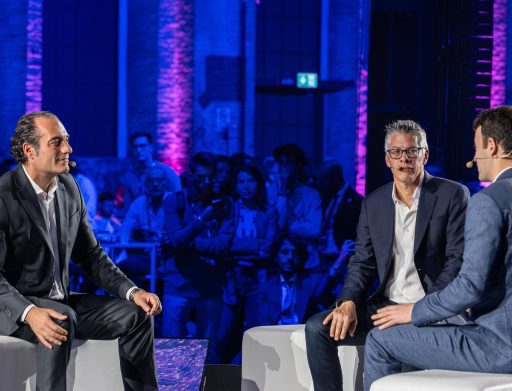
Stellantis and Wayve Demonstrate How AI Can Scale Across Vehicle Platforms
Stellantis and Wayve showcased progress in their strategic technology partnership with Fiat 500e and Maserati Grecale development vehicles, both powered by the Wayve AI Driver.
Read more
22 September 2026 | Press release
Wayve and Mercedes-Benz Partner to Bring the Wayve AI Driver to Future Mercedes-Benz Vehicles
Wayve and Mercedes-Benz have signed a definitive production agreement to integrate the Wayve AI Driver into select future vehicle lines, enabling advanced urban point-to-point driving assistance for customers starting in the next two years.
Read more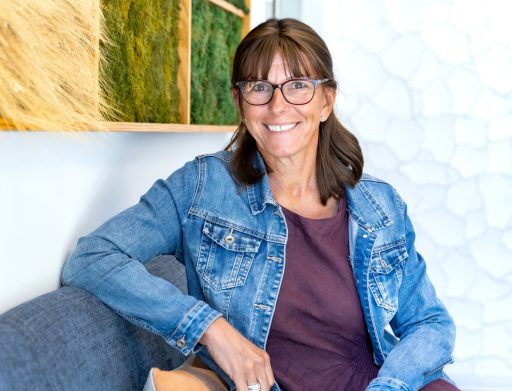
16 September 2026 | Leadership
Wayve Appoints Elisa de Martel as Chief Financial Officer to Accelerate AV2.0 Commercialization
We're excited to welcome Elisa de Martel to Wayve as Chief Financial Officer! With over two decades of financial leadership experience in the deep tech, automotive and AV sectors, Elisa will oversee Wayve's global finance organization as we enter our next phase of growth.
Read more